list
Lists of tips and tricks that will help you become a better you; hack your way to an ultimate work, home and social life.
The 90-Minute Rule Nobody Follows
YOUR BRAIN HAS A RHYTHM YOU'RE IGNORING Your brain operates on a natural cycle called the ultradian rhythm that alternates between approximately ninety minutes of high-cognitive-capacity focused work and approximately twenty minutes of reduced capacity where your brain needs rest and recovery before it can perform at high levels again, and this cycle operates regardless of your willpower, your caffeine intake, or your deadline pressure, meaning that when you push through the natural rest period you are not demonstrating discipline but rather forcing your brain to operate in a degraded state that produces lower quality work, more errors, reduced creativity, and accumulated fatigue that compounds throughout the day until you are essentially running on cognitive fumes by afternoon despite having been working since morning. Sleep researcher Nathaniel Kleitman discovered these ultradian cycles in the 1950s and subsequent research has confirmed that virtually every biological system in the human body follows approximately ninety-minute cycles including sleep stages, hormone secretion, and cognitive processing, and working with these cycles rather than against them is the single most effective productivity intervention available because it does not require more effort or better habits but simply aligns your work schedule with your biology.
By The Curious Writer8 days ago in Lifehack
The Two-List Trick That Billionaires Use
THE HIDDEN COST OF TOO MANY OPTIONS Decision fatigue is silently destroying your productivity, your willpower, and your ability to make good choices about the things that actually matter, because every decision you make throughout the day draws from a finite pool of cognitive resources that depletes progressively regardless of whether the decision is important or trivial, meaning that the mental energy you spend deciding what to eat for breakfast, which route to drive to work, how to respond to a non-urgent email, and whether to attend a social event you do not really want to attend is the same mental energy you need for strategic career decisions, important relationship conversations, creative problem-solving, and the other high-stakes choices that determine the direction of your life. Research by psychologist Roy Baumeister demonstrated that decision-making depletes the same resource as self-control, meaning that after making many decisions your ability to resist temptation, maintain focus, and exercise willpower is significantly reduced, which explains why you make your worst food choices in the evening after a day of decisions, why you procrastinate on important tasks at the end of the workday, and why arguments with partners tend to happen at night when both parties' cognitive resources are depleted.
By The Curious Writer8 days ago in Lifehack
What I Learned From Disconnecting From My Phone for 24 Hours. AI-Generated.
What I Learned From Disconnecting From My Phone for 24 Hours I didn’t think it would be difficult. Spending 24 hours without my phone sounded simple. No social media, no messages, no constant checking. Just one day to reset and step away from everything. But the moment I actually put my phone aside, I realized something uncomfortable. I was more dependent on it than I thought, and that realization alone made the experience feel more serious than I expected.
By Vadim trifiniuc8 days ago in Lifehack
Fun, Easy Ways to Snag Free Stuff
Free is my second-favorite f-word. There’s just something about it—the way it rolls off the tongue, the gratification of taking something home without paying a single cent—that never gets old. If you love getting free stuff without using a five-finger discount and acquiring criminal charges, this post explains the best ways to do it.
By Criminal Matters11 days ago in Lifehack
Turn Boring Tasks Into Easy Wins
Mira hated folding laundry. Not in a dramatic, life-is-unfair kind of way—just the quiet, persistent resistance that showed up every Sunday afternoon. The clothes would sit in a soft, accusing pile on her chair while she found better things to do: scrolling, snacking, reorganizing her desk for no reason at all. “I’ll do it later,” she would think. Later usually meant just before bed, when she was too tired to care. She’d rush through it, annoyed, treating each shirt like an obligation rather than a choice. It wasn’t just laundry. It was dishes, emails, cleaning her room, even replying to messages she actually wanted to answer. Small things. Simple things. Yet they felt heavy—like each one demanded more energy than it deserved. One evening, after staring at a sink full of dishes for ten full minutes without touching them, Mira sighed. “Why is this so hard?” she muttered. Her roommate, Leena, looked up from the couch. “What’s hard?” “The dishes,” Mira said, gesturing dramatically. “It’s not even a big deal, but I just don’t feel like doing it.” Leena smiled slightly. “Then don’t do the dishes.” Mira blinked. “What?” “Don’t do the dishes,” Leena repeated. “Just wash one plate.” Mira frowned. “That doesn’t make sense.” “It does,” Leena said, sitting up. “You’re not avoiding the dishes. You’re avoiding the idea of doing all of them.” — That sentence stayed with Mira longer than she expected. You’re avoiding the idea of doing all of them. The next morning, she faced the same sink. Same dishes. Same resistance. But this time, she tried something different. “I’m not doing the dishes,” she told herself. “I’m just washing one plate.” She picked up a plate, turned on the tap, and washed it. It took less than thirty seconds. She paused. The resistance didn’t disappear—but it shrank. Just enough. “Okay… maybe one more,” she thought. Then another. Within minutes, the sink was empty. Mira stood there, slightly confused. The task hadn’t changed. The time it took hadn’t changed. Only the way she approached it had. — Over the next few days, Mira started experimenting. Laundry? Not “fold everything.” Just fold two shirts. Emails? Not “clear inbox.” Just reply to one. Cleaning? Not “clean the room.” Just clear the desk. Each time, something strange happened. Starting became easier. And once she started, stopping felt… unnecessary. It wasn’t that the tasks had become fun. But they no longer felt overwhelming. They were just small, manageable actions instead of one giant, looming responsibility. — One evening, Mira sat with a cup of tea, thinking about the shift. She realized that most of her resistance wasn’t about effort—it was about perception. Her brain treated small tasks like big commitments. Folding laundry became spending the next 30 minutes doing something boring. Washing dishes became being stuck in the kitchen. Replying to messages became draining social energy. So she avoided them—not because they were hard, but because they felt heavy before she even began. What Leena had shown her was simple, but powerful: Make the task smaller than your resistance. — Mira took it a step further. She started turning chores into tiny “wins.” Instead of saying, “I have to clean,” she told herself, “Let me get one quick win.” The language mattered. “Have to” felt like pressure. “Quick win” felt like a game. She even started timing herself. “Let’s see how much I can do in three minutes.” Suddenly, boring tasks had a new layer—not excitement exactly, but lightness. Three minutes turned into five. Five into ten. And even when she stopped early, she still felt good. Because she had done something, instead of nothing. — There were still days when she didn’t feel like doing anything. On those days, she lowered the bar even more. “Just stand up.” “Just pick it up.” “Just open the laptop.” Sometimes, that’s all she did. But more often than not, that tiny action broke the stillness. Action created momentum. Momentum made things easier. — Weeks passed, and Mira noticed something surprising. Her life didn’t feel as cluttered anymore. Not because she had become more disciplined or suddenly loved chores—but because she stopped letting small tasks pile up into big ones. She no longer waited for the “right mood.” She worked with whatever mood she had. Tired? Do one thing. Unmotivated? Do the easiest version. Busy? Do a quick win. There was always a way forward. — One Sunday, Mira folded her laundry while listening to music. Halfway through, she paused—not out of resistance, but realization. This used to feel like a chore she avoided all week. Now, it was just… something she was doing. No drama. No delay. No internal battle. Just action. She smiled slightly. It wasn’t that boring tasks had become exciting. It was that they had stopped being intimidating. — Later that night, Leena walked into the room and glanced at the neatly folded clothes. “Look at you,” she said. “Laundry done before midnight.” Mira laughed. “Yeah. Turns out, it’s easier when you don’t treat it like a life event.” Leena grinned. “Exactly.” Mira leaned back, thinking. The tasks hadn’t changed. Her life hadn’t magically become more productive. But something small had shifted—and that made everything easier. She no longer waited for motivation to arrive. She created it, one tiny action at a time. — Because in the end, the secret wasn’t about making boring tasks exciting. It was about making them small enough to start. And once you start, you realize something most people overlook: Easy wins aren’t found. They’re created.
By Sahir E Shafqat12 days ago in Lifehack
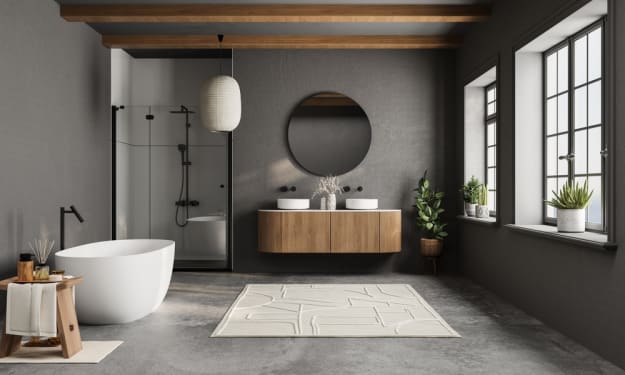
Top Luxury Bathroom Brands. AI-Generated.
Luxury bathrooms today are defined by more than premium finishes. Specification decisions now revolve around performance engineering, digital integration, water efficiency, and long-term reliability in real projects. The following ranking reflects how brands are actually positioned across hospitality, residential developments, and commercial installations.
By Barbara Tamagno12 days ago in Lifehack
Online Reviews Aren't as Trustworthy as we Think
Before you buy something, what is the first thing you do? You’re in the same financial situation as most of your peers if you said to check your bank account balance to determine if you’ll eat ramen noodles all week or have a little spending room.
By Criminal Matters13 days ago in Lifehack
5 Home Fragrance Mistakes Making Your Living Space Smell Worse
Here's something nobody warns you about when you start buying candles, diffusers, and room sprays: the wrong approach doesn't just waste your money. It can make your home smell worse than it did before you tried anything.
By Best Home Aroma16 days ago in Lifehack
Cybersecurity in 2026: Protecting the Digital World
In 2026, cybersecurity has become a major concern for individuals, businesses, and governments around the world. As technology continues to grow rapidly, almost every part of our daily life depends on digital systems. People use the internet for communication, shopping, banking, education, and even healthcare. While this digital progress has made life easier and faster, it has also increased the risk of cyber threats. Cybersecurity is essential to protect our digital world from these dangers.
By aadam khan16 days ago in Lifehack