Beckett Dowhan
Bio
Where aviation standards meet real-world sourcing NSN components, FSG/FSC systems, and aerospace-grade fasteners explained clearly.
Stories (278)
Filter by community
Complete Journey of an Aircraft Part From Production to Installation. AI-Generated.
The journey of an aircraft part is a complex and highly regulated process that reflects the precision, safety, and reliability required in the aerospace industry. Every component, whether structural or electronic, must pass through multiple stages of design, production, testing, certification, and installation before it becomes part of an operational aircraft. This lifecycle ensures that each component meets strict performance and safety standards while supporting efficient aircraft operation.
By Beckett Dowhan17 days ago in Writers
Temperature Monitoring in Aircraft Systems: The Importance of Precision Thermometers
Introduction Temperature control is a critical factor in aircraft performance and safety. From engine operation to cabin comfort, maintaining optimal temperature levels ensures that systems function efficiently under varying flight conditions. Thermometers play a vital role in monitoring these conditions, providing accurate data that supports safe aircraft operation.
By Beckett Dowhan17 days ago in Writers
The Role of Mechanical Assemblies in Aircraft Systems. AI-Generated.
Aircraft are among the most complex machines ever engineered, made up of thousands of individual parts working together in precise coordination. While engines and avionics systems often receive the most attention, mechanical assemblies form the essential framework that allows these major systems to function effectively.
By Beckett Dowhan17 days ago in FYI
Where to Source Certified Aircraft Parts in the USA. AI-Generated.
Finding certified aircraft parts in the USA is not just about availability, it is about safety, reliability, and trust. Every aircraft depends on thousands of components working together perfectly, and even a small issue can lead to serious problems. Because of this, sourcing the right parts from approved channels becomes an important step in maintaining aircraft performance and meeting strict aviation standards.
By Beckett Dowhan17 days ago in Writers
Plane Parts & Aviation Maintenance in the US. AI-Generated.
The United States has one of the most advanced and highly regulated aviation ecosystems in the world. From commercial airlines and cargo operators to military fleets and private aircraft, the performance and safety of these systems depend heavily on high-quality plane parts and effective maintenance practices. Aircraft are complex machines made up of thousands of components that must function together with precision, making maintenance a critical part of ensuring safe and efficient operations.
By Beckett Dowhan23 days ago in FYI
How Quality Standards Improve Aircraft Safety and Performance. AI-Generated.
Aircraft safety does not depend on a single system or component. It is the result of thousands of parts working together without failure. This is where quality standards play a critical role. They ensure that every aircraft component meets strict requirements before it is approved for use. Without these standards, even a small defect could lead to serious risks in flight operations.
By Beckett Dowhan24 days ago in Writers
How Aircraft Hydraulic Systems Power Critical Flight Operations. AI-Generated.
While jet engines and advanced avionics often capture the spotlight, aircraft hydraulic systems quietly play one of the most critical roles in ensuring safe and efficient flight. These systems act as the “muscle” of an aircraft, enabling the movement of heavy components with precision and reliability. From controlling flight surfaces to operating landing gear and brakes, hydraulics are essential for nearly every phase of flight.
By Beckett Dowhan24 days ago in FYI
NSN Standardization Simplifies Military Equipment Maintenance. AI-Generated.
Maintaining military equipment is a complex and highly coordinated process that requires precision, speed, and reliability. Armed forces depend on a vast range of systems, including aircraft, ground vehicles, naval platforms, and communication equipment, all of which require regular maintenance and timely replacement of components. In such an environment, standardized identification systems play a critical role in ensuring efficiency. One of the most important systems used globally is the National Stock Number framework, which simplifies how parts are identified, sourced, and managed across defense organizations.
By Beckett Dowhan24 days ago in FYI
How Aircraft Parts Are Selected for Commercial and Military Planes. AI-Generated.
Choosing the right parts for commercial and military aircraft is a critical process that affects flight safety, performance, and longevity. Every component, from engines to small fasteners, is carefully evaluated to ensure it meets rigorous standards and regulatory requirements. The selection process involves a combination of engineering judgment, supplier reliability, material science, and compliance with aviation standards.
By Beckett Dowhan24 days ago in Writers
Precision Measurement Systems Ensuring Aircraft Safety and Stability
Introduction: The Role of Data in Modern Aviation Safety Modern aviation operates on precision, and at the heart of this precision lies accurate data. Every phase of flight from taxi and takeoff to cruising and landing depends on real-time information collected from a vast network of sensors and monitoring systems embedded throughout the aircraft.
By Beckett Dowhan24 days ago in Writers
Exploring Composite Materials in Aerospace Engineering. AI-Generated.
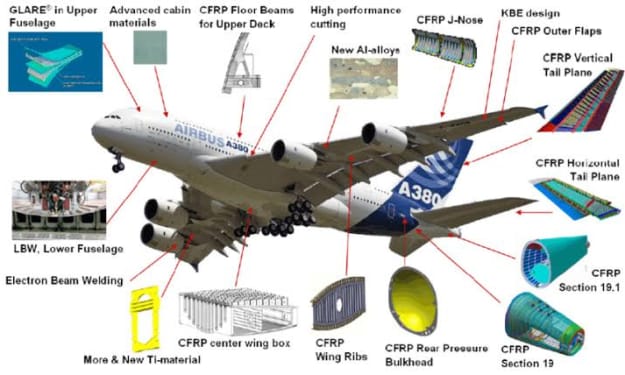
The aerospace industry has always been at the forefront of technological innovation. From the earliest wooden aircraft to modern jetliners and spacecraft, engineers have continually sought materials that are lighter, stronger, and more durable. Today, composite materials play a pivotal role in meeting these demands, transforming the design and performance of aircraft and spacecraft. Composites are engineered materials made from two or more constituent materials with distinct physical or chemical properties. When combined, they produce a material with superior performance characteristics not achievable by individual components alone.
By Beckett Dowhan25 days ago in FYI