
Australia Port Infrastructure Market 2026: Trade Expansion, Smart Ports & Sustainable Maritime Development
How rising global trade, logistics modernization and green port initiatives are transforming Australia’s port infrastructure landscape

Australia Port Infrastructure Market Overview
The Australia port infrastructure market is a critical component of the country’s logistics and trade ecosystem, supporting the efficient movement of goods across international and domestic markets. It includes ports, terminals, cargo handling systems, storage facilities and integrated transport networks connecting sea, rail and road logistics.
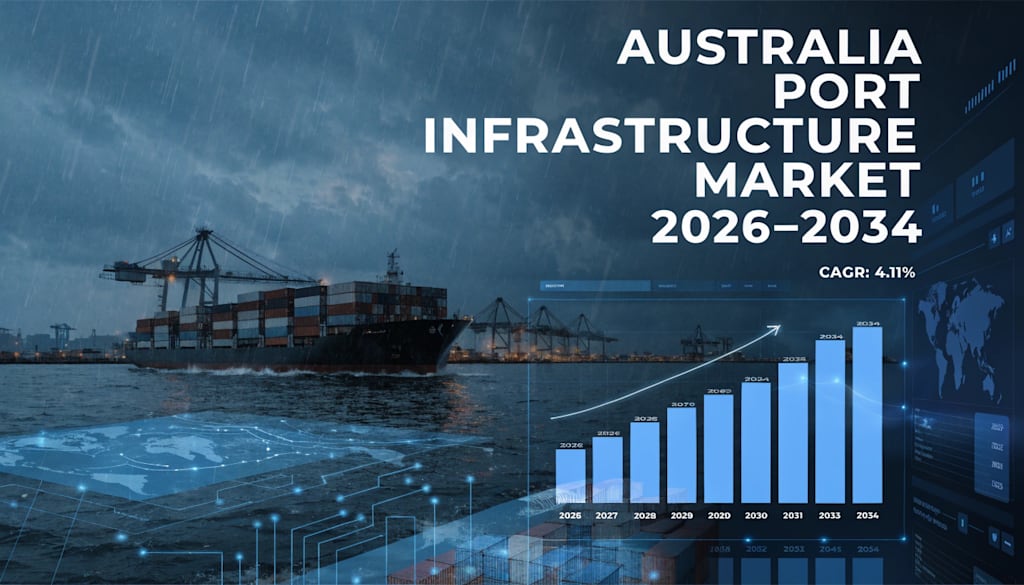
According to IMARC Group, the Australia port infrastructure market size reached USD 4.2 Billion in 2025 and is projected to reach USD 6.1 Billion by 2034, exhibiting a compound annual growth rate (CAGR) of 4.11% during 2026–2034.
The market is driven by increasing international trade volumes, rising investments in port modernization and the growing need for efficient, technology-driven logistics systems.
Key Market Drivers
Rising International Trade and Export Demand
Australia’s strong export base, including minerals, energy and agricultural products, is driving demand for advanced port infrastructure to handle increasing cargo volumes.
Government Investments and Policy Support
Public funding, infrastructure programs and regulatory initiatives are supporting modernization and expansion of port facilities across the country.
Growth in Maritime Logistics and Supply Chains
The increasing complexity of global supply chains is driving the need for efficient port operations, reduced turnaround times and improved logistics connectivity.
Adoption of Smart Port Technologies
Digital transformation, including IoT, automation and data analytics, is enhancing operational efficiency and reducing congestion in port operations.
Request a Sample Report with the Latest 2026 Data & Forecasts
What the Opportunities Are
The Australia port infrastructure market presents strong opportunities as trade dynamics and technology continue to evolve.
Development of Green and Sustainable Ports
Ports are investing in renewable energy, electrification and emission-reduction technologies to align with environmental regulations.
Expansion of Public-Private Partnerships (PPP)
Collaboration between government and private investors is accelerating infrastructure development and improving operational efficiency.
Integration with Multimodal Transport Networks
Enhanced connectivity between ports, railways and road networks is improving logistics efficiency and trade flow.
Growth in Containerization and Bulk Cargo Handling
Increasing cargo volumes are driving investments in advanced terminals and automated cargo handling systems.
Digitalization and Automation of Port Operations
Automation technologies and digital platforms are improving productivity, safety and real-time monitoring capabilities.
Recent News and Developments
April 2026: Australia announced government-backed support to secure fuel imports through major ports amid a global fuel crisis, highlighting the strategic importance of port infrastructure in maintaining national energy supply chains and trade continuity.
April 2026: Rising fuel prices and global supply disruptions impacted maritime logistics and transport activity, emphasizing the critical role of ports in ensuring efficient distribution and resilience of Australia’s supply chain network.
April 2026: The Port of Townsville launched a large-scale renewable energy cargo hub to handle wind turbine components and oversized freight, strengthening port capacity and supporting Australia’s clean energy infrastructure expansion.
March 2026: Australia implemented a National Fuel Security Plan and strengthened international coordination to stabilize maritime trade routes, reinforcing the importance of port infrastructure in handling energy imports and global trade disruptions.
January 2026: Increasing adoption of digital technologies such as IoT, AI, and real-time tracking systems enhanced port operations efficiency, improving cargo handling, logistics visibility, and overall supply chain performance.
October 2025: Significant investments of around AUD 3.8 billion were made in port infrastructure upgrades over recent years, although rising operational costs and efficiency challenges continued to impact performance and competitiveness.
2025: The Australia port infrastructure market reached approximately USD 4.2 billion, driven by increasing international trade, port modernization projects, and government focus on improving logistics and maritime efficiency.
Why You Should Know About the Australia Port Infrastructure Market?
The Australia port infrastructure market is a backbone of the country’s economy, facilitating international trade and supporting industrial growth. With ports handling a vast majority of trade volumes, continuous investment in infrastructure and technology is essential for maintaining global competitiveness.
With projected growth from USD 4.2 Billion in 2025 to USD 6.1 Billion by 2034, the market demonstrates steady expansion potential driven by trade growth, digital transformation and sustainability initiatives.
As global supply chains evolve and demand for efficient logistics increases, the Australia port infrastructure market is expected to remain a strategic and opportunity-rich segment within the broader transportation and logistics industry.
About the Creator
Amyra Singh
Market research analyst who loves spotting patterns, digging into data, and turning insights into strategies that help brands grow and stay ahead of the curve.
Keep reading
More stories from Amyra Singh and writers in Trader and other communities.
Australia Online Furniture Market 2026: E-Commerce Growth, Customization & Digital Home Shopping Trends
Australia Online Furniture Market Overview The Australia online furniture market is a rapidly expanding segment of the country’s e-commerce and home furnishings industry, offering a wide range of products including sofas, beds, tables, storage units and home décor through digital platforms. The market is benefiting from increasing internet penetration, convenience-driven shopping behavior and advancements in online retail technologies.
By Amyra Singha day ago in Trader


Comments
There are no comments for this story
Be the first to respond and start the conversation.